Wednesday, 26 October 2011

Hamilton By Design – SolidWorks Design and Engineering Services

Hamilton By Design delivers engineering-led mechanical design and SolidWorks modelling services for industrial, mining, and manufacturing projects across Australia.

Our approach is built around one simple idea:
good design starts with engineering, not just drafting.

By combining practical engineering experience with advanced 3D modelling tools, we develop solutions that are accurate, buildable, and suited to real-world operating environments.


A Practical Approach to Design

Many design services focus purely on producing drawings. While these may look correct, they often fail to account for real-world conditions such as installation constraints, fabrication limitations, and existing plant geometry.

At Hamilton By Design, we take a different approach.

Our work is driven by:

  • Mechanical engineering principles
  • Real-world site experience
  • Practical fabrication knowledge
  • Integration with existing plant and equipment

This ensures that every design we produce is not only technically correct, but also practical to manufacture and install.


SolidWorks – A Core Design Tool

We utilise SolidWorks as our primary 3D CAD platform to develop detailed models, assemblies, and fabrication-ready drawings.

SolidWorks allows us to:

  • Create parametric 3D models
  • Develop complex assemblies
  • Generate detailed fabrication drawings
  • Produce bill of materials (BOMs)
  • Support engineering analysis and validation

Modern CAD platforms such as SolidWorks play a critical role in bridging design and manufacturing by improving accuracy and collaboration across projects.

However, the true value of SolidWorks comes from how it is applied within an engineering workflow.

👉 Learn more about our SolidWorks design services:
https://www.hamiltonbydesign.com.au/home/australian-design-drafting-services/solidworks/


Engineering-Led SolidWorks Design

What sets Hamilton By Design apart is our engineering-led approach to SolidWorks modelling.

Rather than simply creating geometry, we consider:

  • Load cases and structural performance
  • Material selection and durability
  • Fabrication methods and tolerances
  • Installation and access constraints
  • Maintenance and operational requirements

This ensures that designs are developed with the full project lifecycle in mind—from concept through to fabrication and installation.


Designing for Industrial Environments

Our SolidWorks design services are particularly suited to heavy industry, including:

  • Mining and mineral processing
  • Manufacturing and production facilities
  • Materials handling systems
  • Plant upgrades and modifications

These environments require robust, practical solutions that perform under demanding conditions.

Our experience working in operational sites allows us to design systems that:

  • Integrate with existing infrastructure
  • Minimise downtime during installation
  • Improve reliability and performance
  • Meet safety and compliance requirements

From Concept to Fabrication

At Hamilton By Design, our goal is to deliver complete, fabrication-ready design solutions.

Typical deliverables include:

  • 3D models and assemblies
  • General arrangement (GA) drawings
  • Detailed fabrication drawings
  • Bill of materials (BOM)
  • Engineering notes and specifications

These outputs are developed to support fabrication, procurement, and installation—ensuring a smooth transition from design to construction.


Reverse Engineering and Existing Plant

Many projects involve working with existing plant where drawings are incomplete, outdated, or unavailable.

Using SolidWorks, we can reverse engineer existing components and systems to create accurate, up-to-date models.

This includes:

  • Rebuilding geometry from site measurements or scan data
  • Developing new drawings for legacy equipment
  • Modifying existing designs to suit upgrades
  • Supporting replacement and maintenance projects

This process helps reduce uncertainty and ensures compatibility with existing assets.


Reducing Project Risk

Poor design coordination is one of the leading causes of project delays and cost overruns.

By combining engineering expertise with SolidWorks modelling, we help reduce:

  • Dimensional errors
  • Fabrication issues
  • Installation clashes
  • Rework and delays
  • Safety risks

This is particularly important in industrial environments where downtime is costly and access is limited.


A Modern Engineering Workflow

Engineering design is no longer just about drawings—it is about creating accurate, coordinated digital models that support the entire project lifecycle.

At Hamilton By Design, we integrate:

  • Mechanical engineering
  • SolidWorks 3D modelling
  • Digital workflows and data management

This allows us to deliver consistent, high-quality results across a wide range of projects.


Why Choose Hamilton By Design?

Choosing the right design partner can make a significant difference to project outcomes.

With Hamilton By Design, you benefit from:

  • Engineering-led design, not just drafting
  • Practical experience in industrial environments
  • High-quality SolidWorks modelling and documentation
  • A focus on buildability and real-world performance
  • Reduced project risk and improved efficiency

Final Thoughts

SolidWorks is a powerful design tool—but its effectiveness depends on how it is used.

By combining SolidWorks with mechanical engineering expertise, Hamilton By Design delivers solutions that are accurate, practical, and ready for fabrication.

Whether you are developing new equipment, upgrading existing plant, or reverse engineering legacy systems, an engineering-led approach ensures better outcomes at every stage of the project.

Friday, 21 October 2011

Hamilton By Design – Engineering, 3D Scanning and Digital Design Solutions

Hamilton By Design provides engineering-led mechanical design, 3D laser scanning, and digital modelling services for industrial, mining, and manufacturing projects across Australia.

Our approach is built on a clear understanding of one key issue in engineering projects:
design failures often come from inaccurate or incomplete information.

By combining real-world data capture with advanced engineering tools, we deliver practical, buildable solutions that integrate seamlessly into existing environments.


A Modern Engineering Approach

Engineering has evolved significantly over the past decade. Traditional workflows often relied on outdated drawings, manual measurements, and assumptions about site conditions. These methods introduce risk—particularly in brownfield environments where existing plant geometry is rarely documented accurately.

At Hamilton By Design, we take a different approach.

We combine:

  • Mechanical engineering expertise
  • 3D laser scanning (LiDAR)
  • SolidWorks 3D modelling
  • Point cloud to CAD workflows

This creates a complete digital engineering process that supports projects from initial site capture through to final design and delivery.


3D Laser Scanning – The Foundation of Accurate Design

Accurate data is the foundation of any successful engineering project.

3D laser scanning allows us to capture highly detailed, real-world geometry of existing plant, equipment, and infrastructure. This eliminates the need for assumptions and provides a reliable basis for design.

Key benefits include:

  • High-accuracy capture of complex environments
  • Reduced reliance on outdated drawings
  • Improved design coordination
  • Faster project delivery
  • Reduced rework and installation issues

👉 Learn more about our Sydney scanning services:
https://www.hamiltonbydesign.com.au/home/engineering-services/3d-laser-scanning/sydney-3d-scanning/


Industrial 3D Scanning for Plant and Infrastructure

Industrial facilities present unique challenges—congested layouts, restricted access, and live operations all require a structured and controlled approach to data capture.

Our industrial 3D scanning services are designed to support:

  • Manufacturing plants
  • Mining infrastructure
  • Processing facilities
  • Materials handling systems

By capturing accurate plant data before design begins, we help engineering teams plan upgrades, modifications, and installations with greater confidence.

👉 Explore industrial 3D scanning in Sydney:
https://www.hamiltonbydesign.com.au/home/engineering-services/3d-scanning-sydney/industrial-3d-scanning-sydney/


From Scan to Model – A Complete Workflow

At Hamilton By Design, scanning is not a standalone service—it is integrated directly into the design process.

Our workflow follows a structured approach:

Scan → Register → Model → Design → Deliver

This ensures that every design is based on verified geometry and aligned with real-world conditions.

Using this workflow, we can:

  • Develop accurate 3D models from point cloud data
  • Design equipment that fits within existing plant
  • Identify clashes before fabrication
  • Improve coordination across disciplines

Modern engineering workflows increasingly rely on integrated digital tools to bridge the gap between design and manufacturing, improving accuracy and reducing errors.


Supporting Projects Across Australia

Hamilton By Design supports engineering projects across major industrial regions, including Sydney, Brisbane, and Perth.

We provide a combination of on-site data capture and remote modelling, allowing us to deliver consistent, high-quality outputs regardless of location.

Brisbane Engineering Scanning Services

https://www.hamiltonbydesign.com.au/home/engineering-services/3d-laser-scanning/3d-scanning-engineering-brisbane/

Perth Engineering Scanning Services

https://www.hamiltonbydesign.com.au/home/engineering-services/3d-laser-scanning/3d-scanning-engineering-perth/

By combining local scanning with centralised engineering workflows, we ensure efficient project delivery across Australia.


Mechanical Design and SolidWorks Modelling

In addition to scanning, Hamilton By Design provides full mechanical design and modelling services using SolidWorks.

SolidWorks is a leading 3D CAD platform used to develop parametric models, assemblies, and fabrication-ready drawings for industrial applications.

Our capabilities include:

  • 3D modelling of plant and equipment
  • Structural and mechanical design
  • Reverse engineering of existing components
  • Fabrication drawings and documentation
  • Integration with scanned site data

By combining SolidWorks with accurate scan data, we ensure that designs are both precise and practical.


Reverse Engineering Existing Plant

Many industrial projects involve working with legacy equipment where documentation is incomplete or outdated.

Using 3D scanning and modelling, we can:

  • Capture existing equipment geometry
  • Rebuild accurate 3D models
  • Develop updated drawings
  • Modify designs for upgrades or replacements

This is particularly valuable for plant upgrades, shutdown planning, and ongoing maintenance projects.


Reducing Risk in Engineering Projects

One of the biggest advantages of integrating scanning with engineering design is the reduction of project risk.

By working from accurate data, we help minimise:

  • Dimensional errors
  • Installation clashes
  • Fabrication rework
  • Project delays
  • Safety risks

This is especially important in live operational environments where downtime and errors can have significant cost implications.


A Practical, Engineering-Led Philosophy

At Hamilton By Design, our focus is not just on producing drawings—it is on delivering engineering solutions that work in real-world conditions.

This means:

  • Designing with fabrication and installation in mind
  • Considering maintenance and operational requirements
  • Working from accurate, verified data
  • Delivering outcomes that reduce risk and improve efficiency

Our goal is to provide a service that supports the entire project lifecycle—from initial concept through to construction and operation.


Final Thoughts

Hamilton By Design combines mechanical engineering, 3D laser scanning, and digital modelling into a single, integrated service offering.

By capturing accurate site data and developing coordinated designs, we help clients deliver projects more efficiently, with fewer errors and greater confidence.

Whether you are upgrading an existing plant, planning a shutdown, or developing new infrastructure, an engineering-led approach built on accurate data is essential for success.

Hamilton By Design – Engineering, 3D Scanning and Mechanical Design Services

Hamilton By Design delivers engineering-led mechanical design, 3D laser scanning, and digital modelling services to support industrial, mining, and manufacturing projects across Australia.

Our approach is built around one core principle:
design must reflect real-world conditions—not assumptions.

By combining mechanical engineering with advanced 3D scanning and SolidWorks modelling, we help clients reduce risk, improve accuracy, and deliver projects that work first time.


Engineering Built Around Real-World Outcomes

In industrial environments, design is rarely straightforward. Existing plant, limited access, outdated drawings, and operational constraints all create challenges that must be addressed early in the design process.

At Hamilton By Design, we focus on delivering practical engineering solutions that consider:

  • Existing plant geometry and constraints
  • Fabrication and installation requirements
  • Maintenance access and operational performance
  • Safety and compliance requirements

Rather than producing drawings in isolation, we develop designs that integrate seamlessly into real operating environments.


3D Laser Scanning – Capturing What Actually Exists

One of the biggest sources of engineering risk is relying on inaccurate or incomplete information.

Traditional methods often depend on:

  • Legacy drawings
  • Manual measurements
  • Assumptions about existing conditions

To overcome this, we use engineering-grade 3D laser scanning to capture highly accurate site data.

This allows project teams to work from real-world geometry, improving coordination and reducing costly errors during fabrication and installation.

👉 Learn more about our Sydney scanning services:
https://www.hamiltonbydesign.com.au/home/engineering-services/3d-laser-scanning/sydney-3d-scanning/


Industrial 3D Scanning for Complex Environments

Industrial sites such as processing plants, manufacturing facilities, and mining infrastructure present unique challenges. Congested layouts, restricted access, and live operations require a precise and controlled approach to data capture.

Our industrial scanning services are designed specifically for these environments, enabling:

  • Accurate capture of complex plant layouts
  • Improved design coordination
  • Reduced shutdown risk
  • Better planning for upgrades and modifications

👉 Explore industrial scanning solutions in Sydney:
https://www.hamiltonbydesign.com.au/home/engineering-services/3d-scanning-sydney/industrial-3d-scanning-sydney/


From Scan to Model – A Complete Engineering Workflow

At Hamilton By Design, we integrate scanning directly into the design process through a structured workflow:

Scan → Register → Model → Design → Deliver

This approach ensures:

  • Accurate digital representation of existing assets
  • Reliable 3D models for engineering design
  • Improved clash detection and coordination
  • Reduced rework during fabrication

By working from verified data, we eliminate uncertainty and improve project outcomes across all stages.

👉 Learn more about our 3D laser scanning capabilities:
https://www.hamiltonbydesign.com.au/home/engineering-services/3d-laser-scanning/


Supporting Projects Across Australia

Our services extend across major industrial regions, supporting projects in cities and remote locations alike.

We regularly deliver scanning and engineering services in:

  • Sydney – detailed plant capture and modelling for construction and industrial upgrades
  • Brisbane – engineering scanning for manufacturing and infrastructure projects
  • Perth – mining and industrial plant scanning and modelling

👉 Brisbane scanning services:
https://www.hamiltonbydesign.com.au/home/engineering-services/3d-laser-scanning/3d-scanning-engineering-brisbane/

👉 Perth scanning services:
https://www.hamiltonbydesign.com.au/home/engineering-services/3d-laser-scanning/3d-scanning-engineering-perth/

By combining local site capture with centralised modelling and engineering, we deliver consistent, high-quality outputs across Australia.


Mechanical Design and Digital Engineering

In addition to scanning, our team provides comprehensive mechanical design and modelling services.

This includes:

  • 3D CAD modelling of plant and equipment
  • Reverse engineering of existing components
  • Design of upgrades and modifications
  • Fabrication-ready drawings and documentation
  • Integration with existing infrastructure

Our designs are developed with a strong focus on buildability, maintainability, and performance.


Reverse Engineering Existing Plant

Many industrial projects involve working with legacy equipment where drawings are incomplete or no longer accurate.

Using a combination of scanning and modelling, we can:

  • Capture existing equipment geometry
  • Recreate accurate 3D models
  • Develop updated engineering drawings
  • Modify and optimise existing designs

This process is particularly valuable for plant upgrades, shutdown planning, and replacement components.


Reducing Risk in Engineering Projects

A key benefit of combining 3D scanning with engineering design is the reduction of project risk.

By working from accurate data, we help minimise:

  • Dimensional errors
  • Installation clashes
  • Fabrication rework
  • Project delays
  • Safety issues

This is especially important in live operational environments where downtime is costly and access is limited.


A Modern Approach to Engineering

Engineering has evolved significantly with the introduction of digital tools such as LiDAR scanning and 3D modelling.

At Hamilton By Design, we combine:

  • Traditional engineering experience
  • Advanced scanning technology
  • Modern CAD and modelling tools

This creates a fully integrated workflow that supports projects from initial capture through to final design and delivery.

Our focus is not just on producing drawings—but on delivering engineering solutions that perform in real-world conditions.


Final Thoughts

Hamilton By Design provides a practical, engineering-led approach to mechanical design and 3D scanning.

By capturing accurate data, developing coordinated models, and delivering fabrication-ready designs, we help clients improve efficiency, reduce risk, and achieve better project outcomes.

Whether you are upgrading existing plant, planning a shutdown, or developing new infrastructure, working with accurate data and an experienced engineering team can make all the difference.

Hamilton By Design - The Design Team

Hamilton By Design – Engineering-Led Design Team

At Hamilton By Design, our design team is built around a simple principle: engineering comes first.

In many organisations, design and drafting are treated as separate from engineering. However, in real-world industrial environments, this separation often leads to errors, rework, and costly delays. Our approach is different—we integrate mechanical engineering, SolidWorks design, and 3D laser scanning into a single, coordinated workflow.

This ensures every design we deliver is not only accurate, but also practical, buildable, and suited to the conditions it will operate in.


A Team Built for Real-World Engineering

Our design team supports a wide range of industries across Australia, including:

  • Mining and mineral processing
  • Manufacturing and production facilities
  • Industrial plant and infrastructure
  • Construction and brownfield upgrades

These environments demand more than just clean drawings—they require designs that account for real-world constraints such as access, maintenance, installation sequencing, and existing plant geometry.

By combining traditional engineering fundamentals with modern digital tools, our team delivers outcomes that perform in practice—not just on paper.


SolidWorks Design Backed by Engineering

SolidWorks is at the core of our design workflow. It allows us to develop detailed 3D models, assemblies, and fabrication-ready drawings for a wide range of applications.

However, the value of SolidWorks is not just in the software—it is in how it is applied.

Our team uses SolidWorks to:

  • Develop accurate 3D models and assemblies
  • Produce fabrication-ready drawings
  • Generate bill of materials (BOMs)
  • Support engineering analysis and verification
  • Coordinate designs with existing infrastructure

Unlike basic drafting services, our SolidWorks work is supported by engineering input at every stage.

👉 Learn more about our SolidWorks design services:
https://www.hamiltonbydesign.com.au/home/australian-design-drafting-services/solidworks/


Integrating 3D Laser Scanning into Design

One of the biggest challenges in engineering design—particularly in brownfield environments—is understanding what already exists.

Outdated drawings, missing information, and site constraints can all introduce risk into a project.

To address this, our design team integrates 3D laser scanning directly into the design process.

This allows us to capture accurate, real-world geometry and develop models based on actual site conditions rather than assumptions. Engineering-grade scanning provides high-accuracy spatial data that can be used to support modelling, verification, and design coordination.

👉 Explore our 3D laser scanning services:
https://www.hamiltonbydesign.com.au/home/engineering-services/3d-laser-scanning/


Scan to Model – A Complete Workflow

Our workflow is built around a structured process:

Scan → Register → Model → Design → Deliver

This integrated approach allows our design team to:

  • Accurately capture existing plant conditions
  • Develop detailed 3D models from point cloud data
  • Design new components that fit first time
  • Reduce clashes and rework
  • Improve project efficiency and coordination

For clients, this means fewer surprises during installation and greater confidence in the final outcome.


Supporting Projects in Sydney, Perth and Beyond

Our design team supports projects across Australia, with dedicated scanning and modelling services available in key regions.

For example:

By combining local site capture with centralised modelling and engineering, we are able to deliver consistent, high-quality outputs regardless of project location.


Reverse Engineering and Existing Plant Modelling

In many cases, original drawings are incomplete, outdated, or simply unavailable.

Our design team regularly works on reverse engineering projects, where we:

  • Capture existing equipment using 3D scanning
  • Rebuild accurate 3D models
  • Develop updated drawings and documentation
  • Modify designs to suit new requirements

This is particularly valuable for:

  • Plant upgrades and shutdown projects
  • Replacement components
  • Legacy equipment with no documentation
  • Structural and mechanical modifications

By working from accurate data, we reduce uncertainty and improve design reliability.


Designing for Fabrication and Installation

A key focus of our design team is ensuring that all outputs are fabrication-ready and installable.

This includes:

  • Designing with standard materials and fabrication methods in mind
  • Allowing for tolerances and real-world fit-up conditions
  • Considering lifting, access, and installation constraints
  • Ensuring compatibility with existing plant and equipment

This practical, engineering-first approach helps ensure that designs can be manufactured and installed efficiently, without unnecessary rework.


Reducing Risk Through Better Design

Poor coordination between design, engineering, and site conditions is one of the leading causes of project issues.

By integrating scanning, modelling, and engineering, our design team helps reduce:

  • Dimensional errors
  • Site clashes
  • Fabrication rework
  • Installation delays
  • Safety risks

This is particularly important in live operational environments where downtime is costly and access is limited.


A Modern Approach to Engineering Design

The role of a design team has evolved significantly over time. Today, it is no longer enough to simply produce drawings.

Modern engineering design requires:

  • Accurate data capture
  • Integrated digital workflows
  • Strong engineering input
  • Practical understanding of site conditions

At Hamilton By Design, our team combines all of these elements into a single, cohesive service offering.


Final Thoughts

The Hamilton By Design design team is focused on delivering real engineering outcomes—not just drawings.

By combining SolidWorks design, mechanical engineering, and 3D laser scanning, we provide a complete solution that supports projects from concept through to fabrication and installation.

Whether you are upgrading an existing plant, developing new equipment, or reverse engineering legacy systems, an integrated, engineering-led design team can make all the difference.

Monday, 2 May 2011

SolidWorks Designers - Engineering-Led

SolidWorks Designers – Engineering-Led Mechanical Design for Real-World Projects

In today’s industrial and manufacturing environments, the role of a SolidWorks designer has evolved well beyond simple drafting. Modern projects demand accurate, buildable, and fully coordinated designs that integrate seamlessly with existing plant, infrastructure, and operational constraints.

At Hamilton By Design, SolidWorks design is not treated as a standalone drafting exercise—it is part of a broader engineering workflow that combines mechanical engineering, 3D laser scanning, and digital modelling to deliver practical, real-world outcomes.

If you’re looking for reliable, engineering-grade design support, it’s critical to understand what separates a basic CAD operator from an experienced, engineering-led SolidWorks designer.


What Does a SolidWorks Designer Actually Do?

A SolidWorks designer develops detailed 3D models, assemblies, and production drawings used for manufacturing, fabrication, and construction. These models form the foundation for everything from small mechanical components through to large-scale industrial plant systems.

Using SolidWorks, designers can:

  • Create parametric 3D models of parts and assemblies
  • Generate detailed fabrication drawings
  • Develop bill of materials (BOMs) for procurement
  • Simulate loads, stresses, and performance conditions
  • Produce layouts for plant and equipment integration

Modern CAD platforms like SolidWorks enable engineers to design faster and more accurately, while also supporting simulation and manufacturing workflows.

However, the real value comes not from the software itself—but from how it is applied.


The Difference Between CAD Drafting and Engineering Design

One of the most common issues in industry is the disconnect between drafting and engineering.

A basic drafting approach focuses on geometry—lines, shapes, and models that “look correct.” But in real-world projects, that’s not enough.

An engineering-led approach considers:

  • Load cases and structural performance
  • Material selection and fabrication methods
  • Installation constraints and access
  • Maintenance and operational requirements
  • Integration with existing plant and infrastructure

This is where combining SolidWorks with professional mechanical engineering becomes critical.

👉 Learn more about our approach to engineering design:
https://www.hamiltonbydesign.com.au/home/mechanical-engineering-consulting/mechanical-engineering/


Why SolidWorks Is Widely Used in Industry

SolidWorks has become one of the most widely adopted 3D CAD platforms globally due to its flexibility, usability, and powerful design capabilities.

It allows designers to:

  • Build intelligent parametric models
  • Quickly modify designs using design tables
  • Simulate real-world performance conditions
  • Generate manufacturing-ready outputs

Features such as automated cut lists, structural member tools, and simulation capabilities make it particularly well suited for industrial and mechanical applications.

But even with advanced tools, poor input data will always produce poor outcomes.


The Importance of Accurate Existing Conditions

One of the biggest challenges in mechanical design—particularly in brownfield environments—is understanding what already exists.

Too often, projects rely on:

  • Outdated drawings
  • Incomplete models
  • Manual measurements
  • Assumptions about geometry

This introduces risk, especially when designing modifications, upgrades, or new equipment to fit into an existing space.

This is where 3D laser scanning becomes a critical part of the design process.

👉 Explore engineering-grade scanning services:
https://www.hamiltonbydesign.com.au/home/engineering-services/3d-laser-scanning/


Integrating 3D Laser Scanning with SolidWorks

At Hamilton By Design, we combine SolidWorks modelling with high-accuracy LiDAR scanning to create a fully integrated digital workflow:

Scan → Register → Model → Design → Deliver

This approach ensures that all design work is based on real-world geometry rather than assumptions.

Benefits include:

  • Accurate fit-up of new equipment into existing plant
  • Reduced rework and fabrication errors
  • Improved clash detection
  • Better coordination across engineering disciplines
  • Faster project delivery

For projects in major cities, we also provide location-specific scanning services:


SolidWorks for Industrial and Mining Applications

SolidWorks is particularly powerful when applied to heavy industry, including:

  • Mining infrastructure
  • Conveyor systems
  • Transfer chutes
  • Structural steel frameworks
  • Processing plants
  • Manufacturing facilities

These environments demand more than just visual models—they require designs that can withstand harsh conditions, high loads, and continuous operation.

Our experience across industrial projects allows us to develop designs that are:

  • Fabrication-ready
  • Maintenance-friendly
  • Operationally efficient
  • Compliant with relevant standards

Reverse Engineering and Legacy Equipment

In many industrial environments, original drawings simply don’t exist—or are no longer accurate.

This is where reverse engineering becomes essential.

Using a combination of laser scanning and SolidWorks modelling, we can:

  • Capture existing equipment geometry
  • Rebuild accurate 3D models
  • Develop updated drawings and documentation
  • Modify and improve legacy designs

This process is particularly valuable for:

  • Obsolete equipment
  • Custom-built machinery
  • Plant upgrades and shutdown projects

From Concept to Fabrication

A professional SolidWorks designer doesn’t just create models—they deliver complete, buildable solutions.

Typical deliverables include:

  • 3D assemblies and part models
  • 2D fabrication drawings
  • General arrangement layouts
  • Bill of materials (BOM)
  • Engineering notes and specifications

When integrated with engineering analysis, these outputs form the basis for fabrication, procurement, and installation.

👉 Learn more about our SolidWorks capabilities:
https://www.hamiltonbydesign.com.au/home/australian-design-drafting-services/solidworks/


Reducing Risk in Engineering Projects

Poor design coordination is one of the leading causes of project delays, cost overruns, and on-site issues.

By combining SolidWorks design with accurate scan data and engineering oversight, we help reduce:

  • Dimensional errors
  • Installation clashes
  • Rework during fabrication
  • Unplanned shutdown delays
  • Safety risks

This is especially critical in live operational environments where downtime is expensive and access is limited.


A Practical, Engineering-First Approach

At Hamilton By Design, our focus is not just on producing drawings—it’s on delivering engineering outcomes.

That means:

  • Understanding the full project lifecycle
  • Designing with fabrication in mind
  • Considering installation and access constraints
  • Ensuring designs perform in real-world conditions

This approach is particularly valuable for:

  • Brownfield upgrades
  • Shutdown planning
  • Plant modifications
  • Equipment redesign

Supporting Projects Across Australia

We support engineering and design projects across Australia, including major industrial regions and remote sites.

Our workflows are designed to be flexible and scalable, allowing us to:

  • Work remotely using digital models and point clouds
  • Travel for on-site scanning and verification
  • Deliver staged outputs to suit project timelines

Whether your project is located in a major city or a remote mining operation, our approach ensures consistent, high-quality results.


Why Choose an Engineering-Led SolidWorks Designer?

Choosing the right SolidWorks designer can make a significant difference to the success of your project.

An engineering-led approach provides:

  • Better decision-making during design
  • Improved coordination across disciplines
  • Reduced project risk
  • Higher quality deliverables
  • Greater confidence during construction and installation

Rather than simply producing drawings, the goal is to create designs that work—first time, every time.


Final Thoughts

SolidWorks is a powerful tool—but like any tool, its effectiveness depends on how it is used.

By combining SolidWorks with mechanical engineering expertise and 3D laser scanning, it becomes part of a complete digital engineering workflow that delivers real value.

Whether you’re designing new equipment, upgrading existing plant, or reverse engineering legacy systems, an integrated approach ensures accuracy, efficiency, and reliability from concept through to construction.

Thursday, 28 April 2011

Solidworks Designers

At Hamilton By Design, we seek relationships with suppliers that understand what our requirements are, today we rely on companies and software that provide first class solutions.

Anthony Hamilton
Contact - Hamilton By Design Co.


Software and Systems

At Hamilton By Design we seek relationships with suppliers that understand what our requirements are, today we rely on companies software and systems that have proved track records with regard to, meeting our requirements that assist Hamilton by Design delivering projects on time and within budget.

Provide data in the following formats:
Dwg    Dxf    Pdf    Parasolid   Step    Iges     Sat

Using the following software:
DWG Editor
Solidworks
Adobe Illustrator
VectorWorks

We rely on on our software preforming complex tasks in a seamless fashion from an operators prospective as a supplier to clients we strive to offer the same level of service.

Contact - Hamilton By Design Co.


Structural Detailing

Structural Detailing for Accurate Fabrication and Easier Site Installation

At Hamilton By Design, we provide structural detailing services that help turn engineering intent into clear, buildable fabrication information. Our focus is on producing practical, accurate shop drawings and 3D models that fabricators, project managers, and site teams can actually use with confidence.

Good structural detailing does more than document steelwork. It reduces workshop questions, improves coordination, helps identify clashes earlier, and supports smoother fabrication and installation. Whether the job involves a simple support frame or more complex plant and infrastructure steelwork, the goal is always the same: deliver detailing that is clear, efficient, and ready for manufacture.

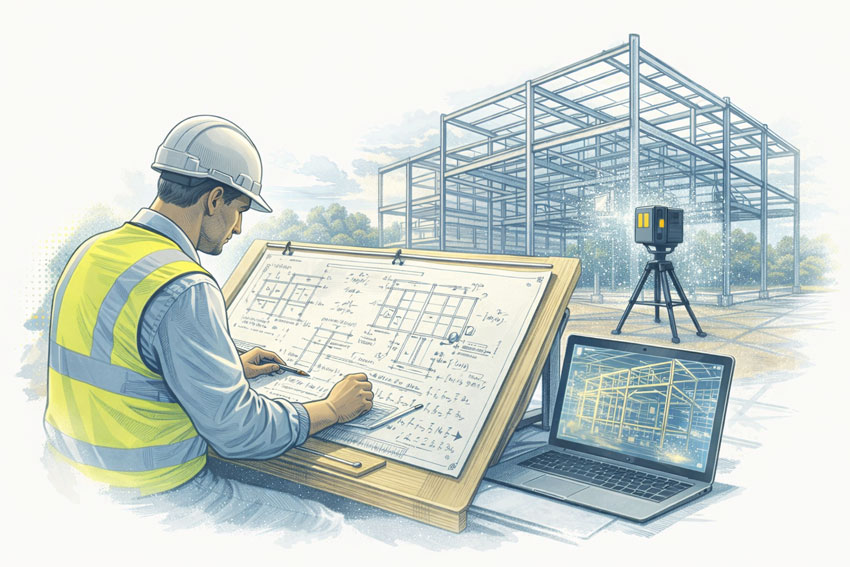
Engineer-led structural drafting with LiDAR scanning of an industrial steel structure for accurate fabrication drawings


Our experience covers a wide range of structural and industrial applications, including structural steel frames, mezzanine floors, portal frames, trusses, access platforms, industrial stairs and ladders, machine support structures, canopies, lifting frames, transfer systems, and plant infrastructure. We also support projects where structural detailing needs to interface closely with mechanical equipment, conveyors, piping, and brownfield modifications.

Where required, we develop 3D CAD models to improve accuracy and coordination before drawings are issued. This can help detect interferences early, improve communication between stakeholders, and support better fabrication outcomes. For brownfield or upgrade projects, our structural detailing can also be supported by engineering-grade 3D laser scanning so that new work is developed around real site conditions rather than assumptions.

Hamilton By Design supports clients who need:

  • structural shop drawings for fabrication
  • detailed assembly drawings
  • cutting lists and material schedules
  • 3D modelling for coordination
  • brownfield structural modifications
  • structural detailing linked to mechanical and plant upgrades

We work with clients across industrial, mining, manufacturing, and infrastructure sectors, delivering detailing that supports fabrication quality, fit-up confidence, and more efficient project execution.

Hamilton By Design logo displayed on a blue tilted rectangle with a grey gradient background


To learn more, visit:


Hamilton By Design – practical structural detailing backed by real engineering experience.

Fabrication Shop Drawings

Hamilton by Design - Structural Detailing Offer a service of producing fully detailed fabrication shop drawings.


Tuesday, 19 April 2011

From MCAD to Reality Capture:

Why Accurate Site Data Drives Better Engineering Outcomes

For years, mechanical engineering design has relied heavily on MCAD (Mechanical Computer-Aided Design) tools to develop and communicate solutions. While these tools remain essential, the real challenge in modern engineering projects—particularly in brownfield environments—is not the software itself.

It’s the accuracy of the data going into the design.

At Hamilton By Design Co., we’ve seen firsthand that most design issues don’t stem from poor modelling capability—they come from working with incomplete, outdated, or assumed site information.


The Problem with Traditional MCAD Workflows

Traditional workflows often follow this sequence:

  • Review old drawings
  • Conduct limited site measurements
  • Build a 3D model based on assumptions
  • Adjust during installation

This approach introduces risk at every stage:

  • Existing conditions are rarely accurate
  • Site modifications are undocumented
  • Critical clashes are only discovered during install

The result?

  • Rework
  • Delays
  • Increased project costs
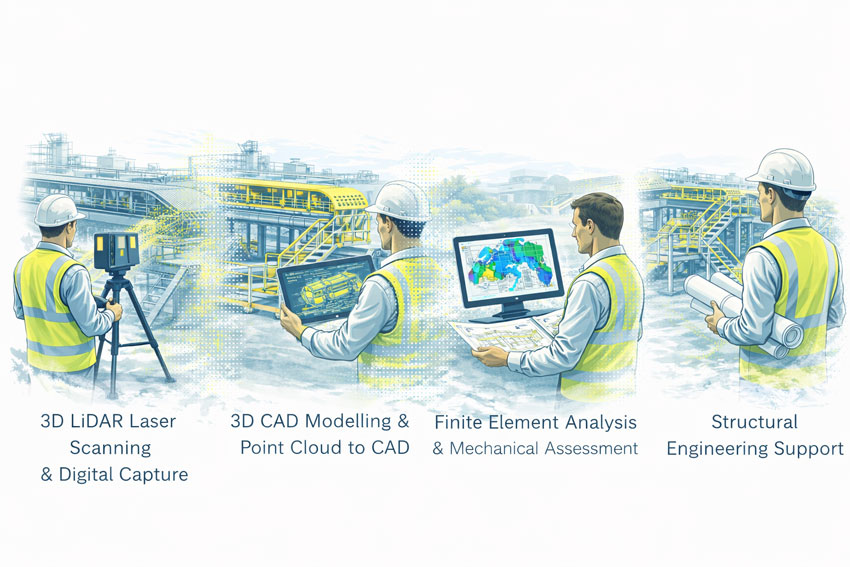
Engineer-led industrial engineering services including LiDAR scanning, 3D CAD modelling, FEA mechanical assessment and structural engineering support


The Shift: From Assumed Geometry to Measured Reality

Modern engineering demands a different approach—one that starts with accurate, high-density site data.

This is where engineering-grade 3D laser scanning becomes critical.

By capturing the real-world environment in precise detail, we eliminate guesswork and enable:

  • Accurate design from day one
  • Clash detection before fabrication
  • Confidence in installation outcomes

Why 3D Scanning Changes Everything

Instead of asking:

“Will this fit?”

We can confidently say:

“This will fit—because it’s designed from reality.”

Using scan-to-CAD workflows, we deliver:

  • As-built digital models
  • Fabrication-ready designs
  • Reduced site risk
  • Faster project delivery

This is especially valuable in:

  • Brownfield plant upgrades
  • Conveyor and chute modifications
  • Structural retrofits
  • Pipework integration

Engineering-Led Reality Capture

Not all scanning is equal.

At Hamilton By Design, our approach is engineering-led, meaning:

  • We understand what needs to be captured
  • We account for line-of-sight limitations
  • We ensure data is suitable for design—not just visualisation

The result is a usable engineering dataset, not just a point cloud.


Supporting Your Projects Across Sydney

If you’re planning upgrades, modifications, or new installations, starting with accurate data is critical.

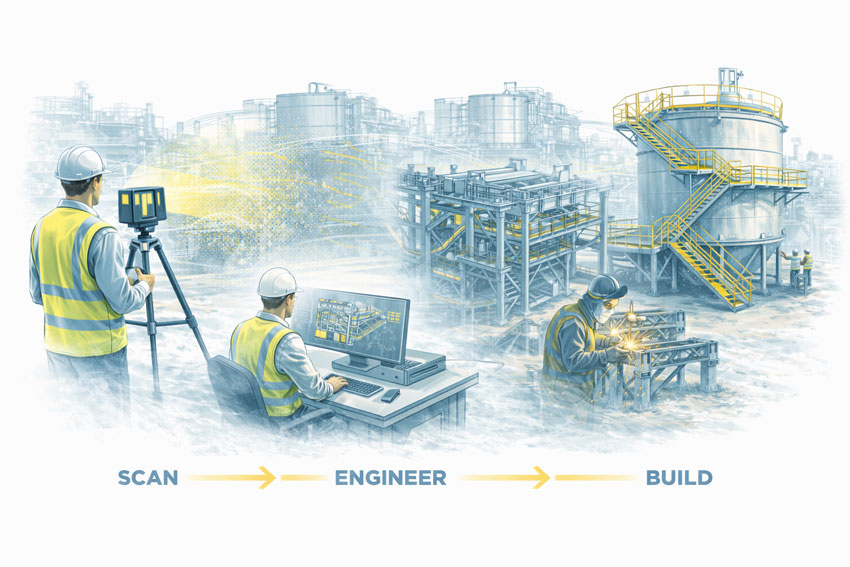
Engineer using 3D LiDAR scanning to capture an industrial facility, followed by CAD modelling and fabrication-ready steelwork.


👉 Learn more about our engineering-grade scanning services here:
https://www.hamiltonbydesign.com.au/home/engineering-services/3d-scanning-sydney/

Our 3D Scanning Sydney service is designed to support:

  • Mechanical engineering projects
  • Industrial facilities
  • Infrastructure upgrades
  • Shutdown planning

Final Thought

MCAD tools are powerful—but they are only as good as the information behind them.

In today’s engineering environment, success comes from combining:

  • Accurate site capture
  • Intelligent design
  • Controlled data workflows

Because ultimately:

The best designs don’t come from assumptions—they come from reality.

Hamilton By Design